
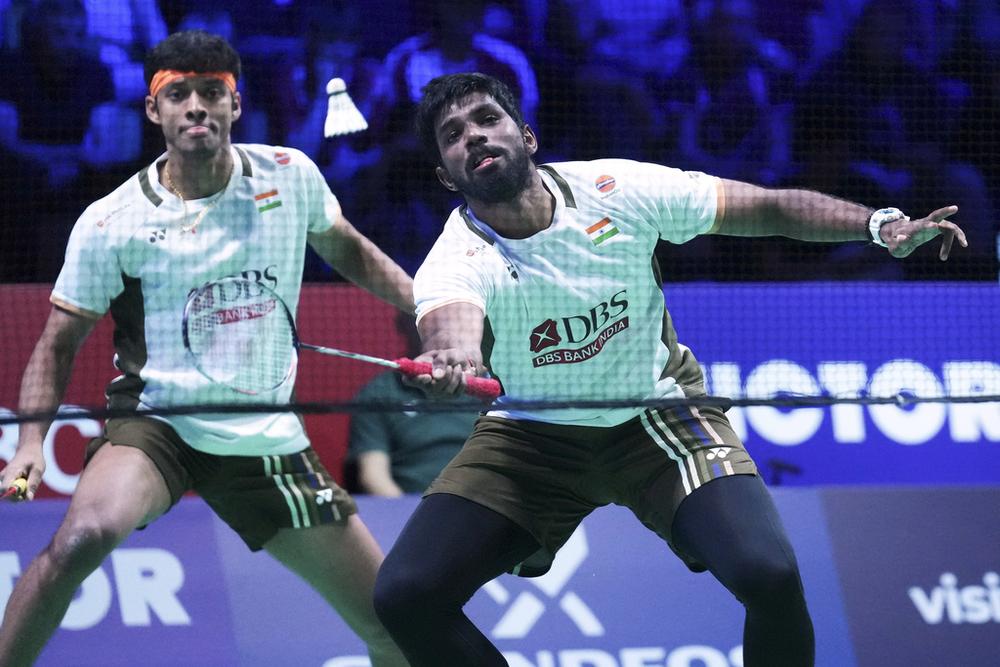
India’s Satwiksairaj Rankireddy and Chirag Shetty enter the BWF World Championships as fifth seeds when the event opens in New Delhi on August 17. Meanwhile, national coach Pullela Gopichand has openly admitted that India still has no doubles succession plan for the day the star pair steps back.
Why India’s Doubles Succession Plan Remains Unclear
Speaking to PTI ahead of the tournament, Gopichand said building a pipeline beyond Satwik and Chirag remains an unresolved challenge. He explained that India now runs roughly 500 badminton academies, compared with four or five a decade ago, and that this rapid growth has created thousands of independent coaching philosophies rather than one unified system. As a result, he noted, doubles development has become harder to coordinate, not easier.
Gopichand also pointed to a deeper cultural pattern behind the shortage. According to him, promising singles players rarely switch to doubles even when their skills suit the discipline better. He observed that a player who shows only decent potential in singles can sometimes become exceptional in doubles, yet few are willing to make that change once they commit to singles early.
Building A Doubles Succession Plan Without A Roadmap
Consequently, Gopichand suggested that India needs a more structured way of bringing its best doubles prospects together to train and compete, rather than leaving development to hundreds of separate academies working independently. However, he stopped short of outlining a concrete doubles succession plan when pressed on the issue.
The comments arrive at a symbolic moment for Indian badminton. New Delhi is hosting the World Championships for the first time since 2009, and the tournament also doubles as a recruitment opportunity for the next generation watching from the stands. Furthermore, PV Sindhu, Lakshya Sen, and the mixed doubles pairing of Dhruv Kapila and Tanisha Crasto will all compete for India across the eight-day event at Indira Gandhi Arena.
Ultimately, Satwik and Chirag’s continued excellence has masked a structural gap that Indian badminton has yet to close. Therefore, while the pair chases a maiden world title this month, the federation faces a longer-term question that home advantage alone cannot answer.